· Synthesis Prism · Updated on 07.11.2026
Israel: Herzog chooses Eisenkot to form a government without an acquired coalition
Isaac Herzog announced on 7 November that he would entrust Gadi Eisenkot with the formation of the next government. Supported during consultations by 67 MPs against 46 for Benjamin Netanyahu, Yashar's leader is to receive his mandate officially on Sunday. But these recommendations, especially those of the Arab parties, are not yet a government agreement.
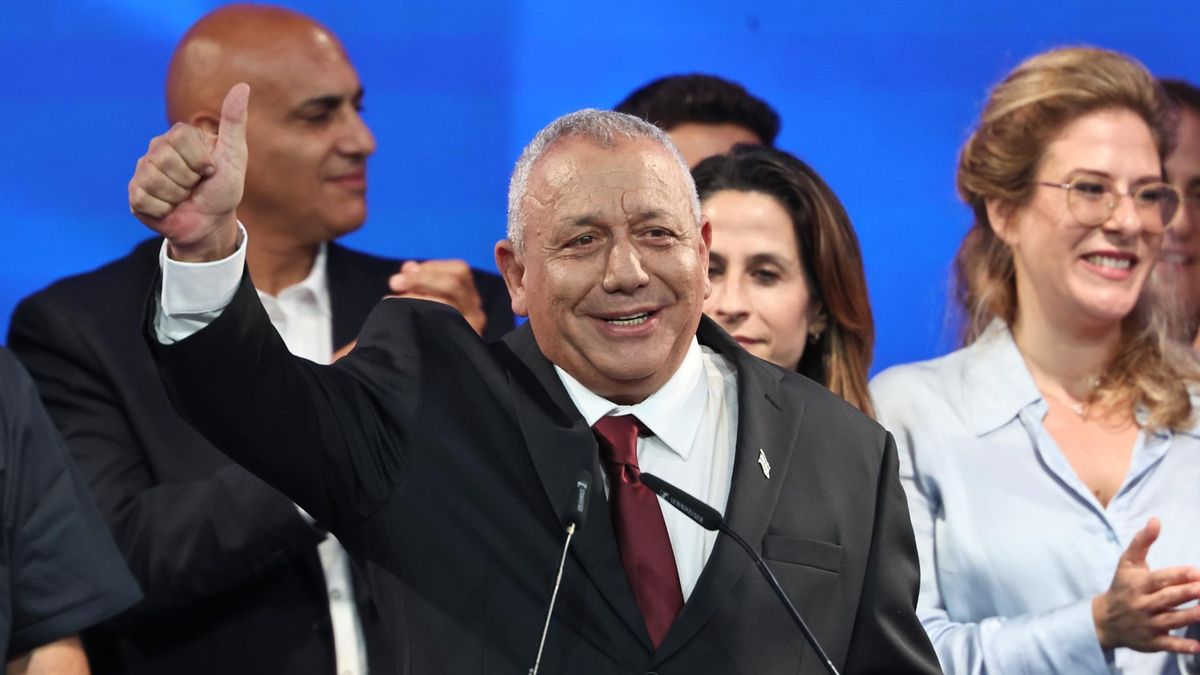
Israeli President Isaac Herzog announced on Saturday, November 7, 2026, his choice to entrust Gadi Eisenkot, former Chief of Staff and leader of the Yashar party, with the formation of a government after the 27 October legislative elections. The consultations gave the opponent the recommendations of 67 of the 120 MPs, compared with 46 for Benjamin Netanyahu. This decision opens a possibility of alternation, but does not mean that Eisenkot has already replaced the Prime Minister. [S2] [S5] [S7]
An announcement before the official delivery of the mandate
The publications describe the same event, with an important calendar distinction: despite titles presenting the mandate as already assigned, the presidential communiqué quoted by elDiario.es foresees its official release Sunday at 5 p.m., at the presidential residence. Al Jazeera and the Jerusalem Post confirm this separation between the Saturday announcement and the next day's ceremony. [S5] [S6] [S7]
As of the mandate, Eisenkot will have 28 days to form a government. Herzog may extend this period by 14 days. Eisenkot called for a "national emergency government", but this political objective is not valid for the parties that can support it. [S1] [S2] [S7]
Recommendations, not yet a majority government
Netanyahu Likud came to the top with 27 seats ahead of Yashar, who won 21. According to the Reuters dispatch published by Público, the Prime Minister's nationalist and religious bloc has 53 elected, compared to 48 for the four formations of the Eisenkot bloc. The Arab parties have 19 seats. Neither bloc, therefore, holds the parliamentary majority alone. [S1] [S4]
The presidential choice depends on the support expressed during the consultations, not only the ranking of the parties in the elections. Unified Judaism of the Torah, a historical ally of Netanyahu, refused to recommend his candidacy. The Arab parties supported Eisenkot. These decisions explain the advantage obtained by the opponent from the President, without guaranteeing that the same elected officials will approve his future government. [S3] [S5]
Arab parties at the centre of negotiations
The main paradox lies in their place in the future majority. Público and La Vanguardia report that Eisenkot refused to form an alliance with Arab parties, while their leaders recommended him to try to turn the Netanyahu page. Their support for his appointment therefore does not regulate their possible participation in the executive or the conditions for external support. [S1] [S3]
For their voters, the concrete issue is the ability of their representatives to influence decisions, beyond the choice of the negotiator. The analysis of support must thus distinguish three different commitments: to recommend a candidate, to allow the nomination of his government and to participate in a lasting majority. At this stage, the sources establish the first, but not an agreement on the other two. [S1] [S5] [S7]
A number of ways remain: a minority government with external support, a rapprochement with the ultra-Orthodox parties or a formula of national unity. They all have obstacles. According to La Vanguardia, Avigdor Lieberman, leader of Yisrael Beitenou, refuses in particular an executive dependent on the Arab parties and instead envisages concessions on the military recruitment of ultra-Orthodox to attract their formations. [S1] [S3]
This negotiation involves a major individual obligation: military service. It also pits potential partners on the distribution of constraints among citizens. However, the information available does not describe an agreed reform, its exemptions or its practical consequences: these are still negotiating positions. [S3]
Netanyahu remains in office pending
Netanyahu denounced the prospect of a government supported by the Arab parties, accusing them in particular of supporting terrorism. These accusations are part of his political argument, not of facts demonstrated by the articles. Yashar responded by denouncing a split speech. This confrontation does not solve the central uncertainty: which parties will agree to support the same team and programme? [S3] [S6]
In the event of Eisenkot's failure, the procedure provides for further possibilities for designation and possibly further elections. Until a government obtains the confidence of the Knesset and takes office, the outgoing executive remains in place on an interim basis. The mandate therefore opens a negotiation; he does not complete the transition of power. [S7]
Sources
- PúblicoPresident of Israel mandate Eisenkot para formar gouverno
- El PaísEl presidente de Israel encarga formar Gobierno al líder opositor Gadi Eisenkot
- La VanguardiaEl presidente de Israel pide al opositor Eisenkot formar gobierno en lugar de Netanyahu
- ABC EspañaEl presidente de Israel encarga al líder opositor Gadi Eisenkot la formación de Gobierno
- elDiario.esEl presidente de Israel encarga formar gobierno al opositor Eisenkot tras recibir el apoyo de los partidos árabes
- Al JazeeraIsraelis president picks Eisenkot over Netanyahu to form next government
- The Jerusalem PostYashar's Eisenkot to receive mandate to form new government, president announces
- Al JazeeraIsraelis president picks Eisenkot over Netanyahu to form next government