· Summary Prism · Updated on 10.11.2026
Ukraine: first talks in Abu Dhabi before talks with Moscow
The Ukrainian delegation began consultations with its European and American partners on 10 November in Abu Dhabi, before the announced trilateral negotiations with Russia. Security assurances and land claims remain at the heart of disagreements, without compromise at this stage. [S2] [S3] [S7]
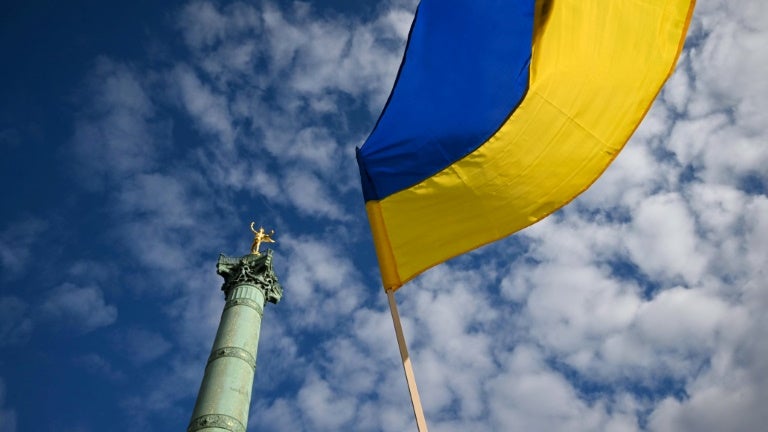
The diplomatic sequence of Abu Dhabi opens with consultations between Ukraine and its partners. According to Roustem Umerov, quoted by France 24 and Kyiv Independent, the Ukrainian delegation began talks on 10 November with European, NATO and American emissaries. Discussions with Moscow under American mediation were announced on 10 and 11 November, after more than eight months of interruption. The information available establishes the beginning of the preparatory discussions, but not yet that of the trilateral meeting itself. [S2] [S3] [S7]
Post-war security at the centre of trade
BFMTV, South West and RTBF describe the same meeting: a new cycle after the Geneva talks in February, interrupted in the context of the war in Iran. Therefore, this meeting should not be confused with previous cycles in Abu Dhabi in January and February. The narratives converge widely, but include information from AFP: their concordance does not represent as many independent confirmations. [S1] [S2] [S4] [S5]
Steve Witkoff and Jared Kushner lead the US delegation. Kushner described the discussions as a way to address Ukrainian and Russian concerns about post-war security. On the Ukrainian side, Umerov lists several priorities: stopping fighting, reliable security guarantees, economic reconstruction and humanitarian measures. These stated objectives are not a programme accepted by the three delegations. [S2] [S7]
Known negotiators, limited expectations
Rustem Umerov leads the Ukrainian team and Vladimir Medinaski leads the Russian team. The Grand Continent and the Russian agency Tass also mention, on the Russian side, the head of military intelligence Igor Kostiukov and the deputy ministers of foreign affairs Mikhail Galuzin and Sergei Riabkov. The Grand Continent interprets the continuity of this team as an indication of the Kremlin's continued position. This reading of Russian intentions remains an analysis, not a proof of the outcome of the negotiations. [S2] [S4] [S6]
The expectations displayed diverge. An anonymous senior Ukrainian official claims to AFP that he did not have "special expectations," while an anonymous American official says he is "warmly optimistic" and speaks of a flexibility shown privately by both sides. No specific concessions shall accompany these declarations. Ukrainian negotiator David Arakhamia also said that he did not expect a breakthrough from this first cycle. [S2] [S5] [S7]
Europeans want to influence their security
The preparatory consultations include representatives of France, the United Kingdom, Germany, Italy, NATO and the European Commission. Their participation in these exchanges does not mean that they have a place in the main format. Tass reports that Moscow maintains its demand for strictly trilateral negotiations between Russia, Ukraine and the United States. [S4] [S6] [S7]
This distinction commits the ability of Europeans and Ukrainians to participate in decisions concerning their security. Following Donald Trump's talk of an agreement with Russia that could "cover all Europe", Kiev and Europeans refused the prospect of an agreement without them. Volodymyr Zelensky said he was coordinated with Ursula von der Leyen before the appointment. [S2] [S5]
Territories, guarantees and protection of inhabitants
Territorial disagreement remains central. Moscow demands the withdrawal of Ukrainian forces from the entire Donetsk region and a redefinition of European security architecture. Kiev refuses this withdrawal and calls for guarantees to deter a further attack. The Kremlin opposes the deployment of European peacekeeping troops, so the parties remain far away on the territories as well as on ways to enforce a possible peace. [S1] [S2] [S5]
For the inhabitants, the immediate needs are concrete: to protect themselves from strikes, to have heating, water and electricity, or to be able to evacuate dangerous areas. BFMTV and RTBF report the continuation of Russian attacks on the Ukrainian energy network. RTBF also mentions a recent local truce in the Kherson area, respected by both sides and allowing humanitarian evacuations. This limited result does not prejudge a general ceasefire. [S1] [S5]
Previous cycles had allowed for exchanges of prisoners and military remains, without conflict resolution. According to Kyrylo Boudanov, quoted by the Kyiv Independent, the intensification of prisoner exchanges is one of the humanitarian subjects of this new sequence. The sources consulted do not yet present a common agreement, a general ceasefire schedule or an agreed guarantee mechanism: the resumption of dialogue remains distinct from its results for those exposed to war. [S5] [S7]
Sources
- BFMTVWar in Ukraine: start of direct negotiations between Kiev and Moscow in Abu Dhabi under American mediation
- Sud OuestWar in Ukraine: Will direct negotiations between Kiev and Moscow resume this Tuesday in Abu Dhabi?
- France 24Live: direct negotiations between Ukraine and Russia resume in Abu Dhabi
- Le Grand ContinentUkraine-Russia negotiations in Abu Dhabi: what does the composition of the Russian delegation reveal?
- RTBF InfoUkraine's invasion: expected resumption of direct negotiations in Abu Dhabi
- TASSTrilateral talks on Ukraine to begin in Abu Dhabi
- The Kyiv IndependentUkraine meetings European, US official in Abu Dhabi ahead of renewed peace talks with Russia