· Summary Prism
North Korea announces cruise missile testing for submarines
Pyongyang claims to have tested two types of cruise missiles on 14 October 2026 off its eastern coast. Seoul confirms that it followed the shots. Their operational scope remains uncertain, in a context of tensions aggravated by a mine explosion that injured three South Korean soldiers. [S1] [S3] [S4]
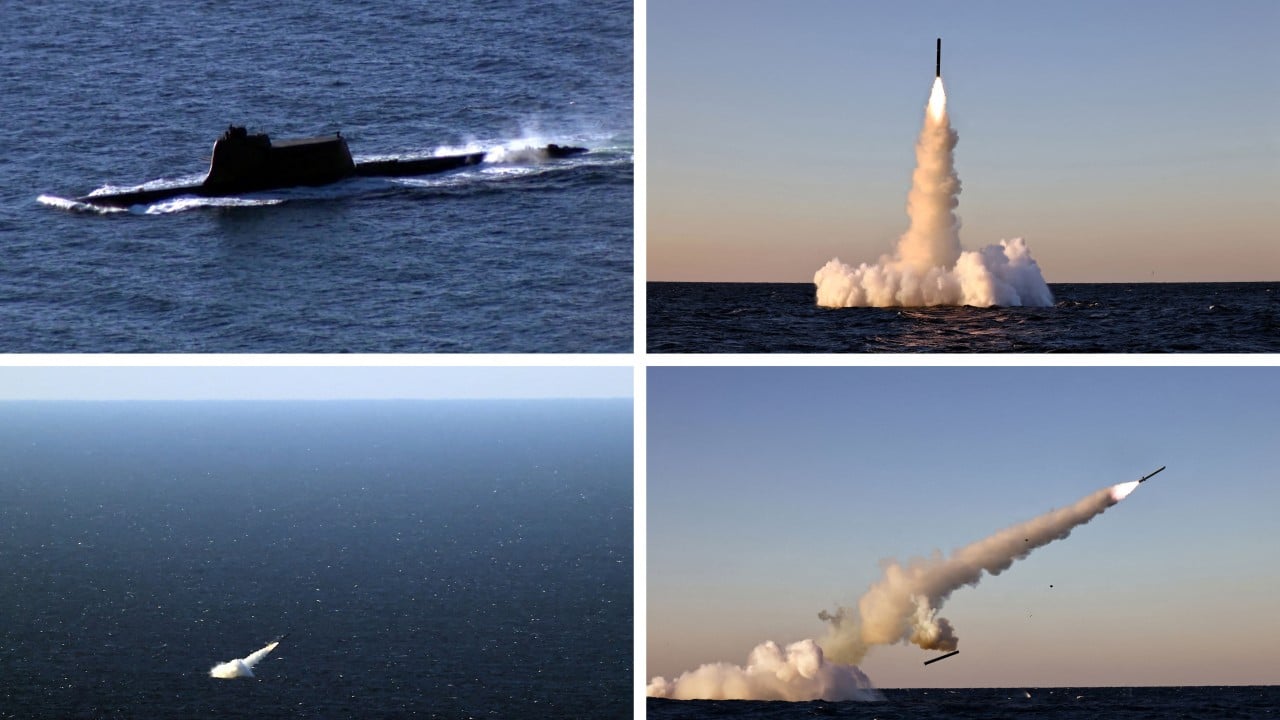
North Korea announced that it had tested two types of strategic cruise missiles to be launched from submarines on Wednesday, 14 October 2026. According to the official KCNA agency, quoted by several media on Thursday, the shooting took place in the waters east of the country. The South Korean staff claims to have monitored them. The reality of launches is thus corroborated by Seoul, but the military capabilities claimed by Pyongyang remain to be distinguished from the performance actually demonstrated. [S2] [S3] [S4]
The shots followed by Seoul, a deterrent claimed by Pyongyang
The sources agree on the general nature of the test: two types of cruise missiles, a launch area off the east coast and a visible objective for the preparation of naval forces. KCNA presents the exercise as a means of evaluating underwater combat systems, improving the delivery of strategic missions and demonstrating the reliability of North Korean deterrence. These objectives are those of the Pyongyang authorities, not an independent assessment of the outcome. [S2] [S3] [S4]
According to Al Jazeera, who quotes KCNA, one of the models tested is the Pulhwasal-3-31, which was already presented as having been launched from earth the previous week. Senior military officials attended the trials. The North Korean agency also assures that the shooting did not have any detrimental effect on the security of neighbouring countries; This insurance remains a declaration by the State which organised them. [S2]
The Japan Times is an important complement: the South Korean General Staff reports that they followed the missiles before they were launched, then during the cruise and end-of-track phases. According to his assessment, one type of missile was fired using a vertical launch system, the other from a torpedo tube. This observation supports the existence of two methods of firing, without in itself validating all the capabilities claimed by the North. [S4]
The submarine and its operational status remain to be specified
Media formulations are not entirely equivalent. The South China Morning Post describes shooting from a submarine. The Hindu and Deutsche Welle point out, however, that the North Korean report does not specify whether the missiles left a real building or a submerged test platform. This distinction counts: testing a weapon for a submarine is not enough to demonstrate that a naval ensemble is ready for combat. [S1] [S3] [S5]
South Korean analysts quoted by the Japan Times estimate that KCNA's photographs suggest the use of the "Kim Kun Ok Hero", a modified diesel submarine presented in September 2023. This is an identification based on images, not an explicit statement. Researcher Hong Min believes that operational capabilities are still limited due to the lack of demonstration of immersion launches, long patrols and operations with ballistic missiles launched from a submarine. [S4]
Pyongyang's "strategic" qualifier suggests a nuclear vocation, says The Hindu and DW. It is not evidence that the missiles in this test carried nuclear warheads. Nor does the published information provide a comprehensive capacity for nuclear deterrence at sea. [S3] [S4] [S5]
A confrontation whose human costs are already visible
The fire occurred after the mine explosion on 21 September in the part of the Seoul-controlled demilitarized zone. Three South Korean soldiers were injured. According to Al Jazeera, a joint South Korean and United Nations investigation concluded that two mines had been laid by North Korean forces about a year earlier; Seoul asked for an official apology. This allocation must be distinguished from a mere observation of tension between the two States. [S1] [S2]
Both countries have also recently reported on their progress on missiles. Seoul presents its hypersonic program as a way to hit important targets by surprise, while Pyongyang invokes its deterrence. These competing military justifications alone do not measure an increase in security for the population. The sources consulted do not document new victims related to the 14 October shooting; The injuries of soldiers at the border constitute an established human cost of recent confrontation. [S1] [S2]
Diplomaticly, no release is reported. The Hindu reports that Pyongyang has rejected US and South Korean offers to resume dialogue and calls in particular for the abandonment of the denuclearization requirement as a prerequisite for discussions. In this context, the tests demonstrate the continuation of the North Korean naval program, but not the completion of the operational capability that its leaders are seeking to display. [S3] [S4]
Sources
- South China Morning PostNorth Korea tests submarine-launched cruise missiles, heightening tensions with Seoul
- Al Jazeera EnglishNorth Korea tests two submarine-launched missiles, state media reports
- The HinduNorth Korea says it tested cruise missiles designed to be fired from submarines
- The Japan TimesNorth Korea tested two types of sub-launched cruise missiles, state media says
- Deutsche Welle — DWNorth Korea says it tested cruise missiles to be launched from sub