· Summary Prism · Updated on 27.10.2026
Legislative in Israel: Netanyahu at the centre of the vote, coalitions will decide on the outcome
The first legislative elections since October 7th took on the look of a referendum on Benjamin Netanyahu. Security responsibilities, judicial independence and sharing of military effort structure the confrontation with Gadi Eisenkot. But there is no guarantee of a parliamentary majority.
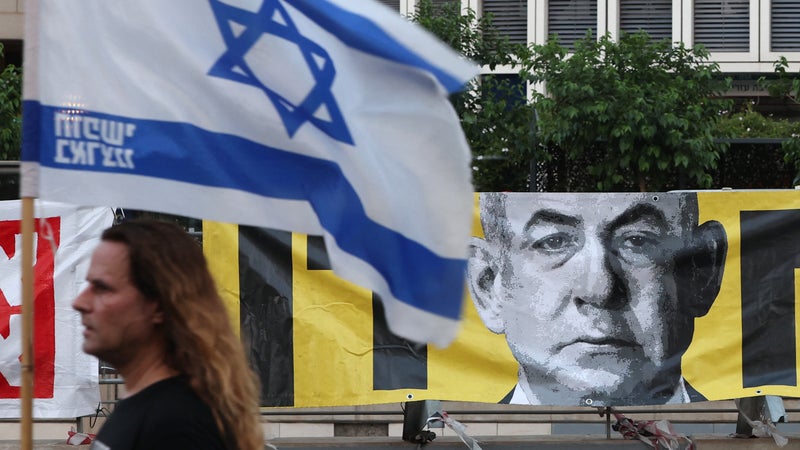
The Israelis vote on Tuesday, October 27, 2026 to renew the 120 seats of the Knesset during the first legislative elections since the Hamas attacks of October 7, 2023. Some 7.3 million voters are called to the polls. BFMTV, South West and RTBF describe an election dominated by the retention or departure of Benjamin Netanyahu, after nearly 19 years in power. However, this customization does not change the rule: citizens choose lists, not directly their Prime Minister. [S1] [S2] [S9] [S10]
October 7th, at the heart of the demand for accounts
The responsibility for the failures that allowed the attacks was a central point of the campaign. The opposition promises an independent commission of inquiry, notably defended by Gadi Eisenkot, former Chief of Staff and main rival of Netanyahu. According to BFMTV, the Prime Minister refuses this formula, challenges his responsibility and challenges military leaders. The RTBF confirms that the survey is one of the common commitments of a very heterogeneous opposition. [S1] [S10]
Disagreement goes beyond electoral sanction: it deals with the possibility of establishing political and security responsibilities through independent investigation. Its defenders, interviewed by RTBF, say they want to understand the failures in order to prevent their repetition. This ambition does not prejudge the conclusions of an inquiry or the precise responsibility of each decision-maker. [S10]
Netanyahu opposes this request for accounts his military balance sheet. He highlights the blows to Hamas and Hezbollah, as well as his proximity to Donald Trump, who has given him his support. South West thus gathers the testimony of a voter convinced of her ability to take initiatives and her American support. These arguments shed light on the support he enjoys, without representing all his constituents. [S2] [S12]
An institutional alternative, not a simple left-right duel
Eisenkot leads Yashar, a formation that NPR places at the right centre, while South West presents it as a centrist. His potential partners range from the right to the liberal left. Their convergence against Netanyahu is therefore not a general agreement on all public policies. In particular, NPR stresses that neither Netanyahu nor Eisenkot currently support the establishment of a Palestinian state in the foreseeable future. [S2] [S12]
Judicial independence further distinguishes the two sides. NPR recalls that the government's reform aimed to weaken the Supreme Court and strengthen the coalition's influence on the appointment of judges. Netanyahu's far right partners want further restrictions on the power of the courts; Eisenkot defends independent and strong justice. Behind this institutional confrontation is the ability of counter-powers to control government decisions. [S12]
Military obligation and its individual costs
The conscription of ultraorthodox men is another subject of friction. BFMTV and NPR describe a Prime Minister who is dependent on the support of ultra-Orthodox parties and reluctant to expand their recruitment, while the army is demanding additional staff. Eisenkot, on the other hand, defends increased participation in military service. RTBF reports that criticism of exemptions also comes from government supporters whose relatives serve in the army. [S1] [S10] [S12]
The debate is about the time, health and life of the military and reservists, subject to repeated commitments. It confronts collective defence needs with the allocation of a particularly binding obligation. The articles consulted detail more the political power relations than the guarantees of conscience or the adjustments to a possible reform: they do not permit a precise assessment of their proportionality. [S10] [S12]
The consequences of alliances also go beyond Israeli citizens. South West reports that far right ministers Itamar Ben Gvir and Bezalel Smotrich are defending plans to expel Palestinians from Gaza and the occupied West Bank. These are political proposals, not voting decisions. However, they relate directly to the possibility of staying at home. [S2]
Votes won't be enough without partners
South West describes elbow-to-neck blocks; NPR noted an advance from Eisenkot in the surveys consulted. These formulations do not necessarily cover the same indicator, but converge on the essential: no camp is assured of bringing together the 61 MPs required by a majority. An electoral advance therefore does not guarantee the ability to govern. [S2] [S12]
Arab parties could weigh in this equation. According to NPR, Rasam is willing to cooperate in exchange for policies against crime and for housing and infrastructure. But the reluctance of the main formations, including that of Eisenkot, to rely on Arab parties could block an alternative majority. Their participation remains a negotiating hypothesis, not an agreement. [S12]
At this stage, the sources consulted describe the vote and coalition scenarios, without establishing a final result. Electoral projections will have to be distinguished from official results and then from parliamentary agreements. NPR envisages several weeks or even months of uncertainty: voters' judgment on Netanyahu will not automatically result in an alternation. [S2] [S12]
Sources
- BFMTVBenjamin Netanyahu, "we love him or we hate him": in Israel, elections with referendum style
- Sud OuestIsrael: The first parliamentary elections since October 7 place Benjamin Netanyahu in the ballot box
- Courrier internationalLegislative elections in Israel: how does it work?
- RTBF InfoLegislative elections in Israel: Benjamin Netanyahu plays his game
- NPRA quick guide to Israel's high-stakes elections
- L’ExpressLegislative elections in Israel: "Benyamin Netanyahu is ready to make more risky decisions"
- RTBF InfoLegislative elections in Israel: a referendum for or against Benjamin Netanyahu
- franceinfoLegislative elections in Israel: Prime Minister Benyamin Netanyahu plays his political survival in the ballot box
- Ouest-FranceREPORT. "We must fire Netanyahu": Israel holds its breath before crucial legislative elections
- Tribune de GenèveElections in Israel: The four questions that can change legislation
- 24 heuresElections in Israel: The four questions that can change legislation
- Le Nouvel ObsLegislative elections in Israel: four scenarios for a very uncertain election