· Summary Prism · Updated on 06.11.2026
Bomb alerts in Europe: four aircraft placed without incident in France, an ongoing investigation
Four aircraft flying over France were targeted on Friday, 6 November, by bomb alerts and landed without incident, according to Matignon. Other threats have affected European flights and media. Several inspections have confirmed the absence of explosives, but the origin of the alerts and their possible coordination remain to be established. [S2] [S3] [S4]
A new series of bomb alerts hit European aviation on Friday 6 November 2026. In France, Matignon announced that four targeted aircraft flying over the territory had landed "uncumbered", with security inspections conducted by the demining services. An investigation is under way to determine the origin of the threats. Europe 1, RFI, Time and BFMTV report the same announcement, without establishing that all European incidents have the same perpetrators. [S2] [S3] [S4] [S5]
In France, distinguishing landings from the results of checks
Three aircraft landed in Orly and the fourth in Bordeaux, according to Europe 1, RFI and the AFP dispatch published by Le Journal de Montréal. BFMTV's text only mentions Orly: its presentation therefore differs on this point. Publications converge on the absence of landing incidents and the announcement of inspections. They do not provide a detailed audit report for each of the four aircraft: a clean landing is not a search result alone. [S2] [S3] [S5] [S6]
This day extends a series of threats reported since the beginning of the week. On Thursday, at least 20 flights had already been involved, without explosive discovery according to the authorities and companies mentioned by the AFP. In particular, Aer Lingus Dublin-Rome had been escorted by military aircraft to the base of Evreux. These events of the day before illuminate the context, but should not be confused with the four new alerts announced on Friday. [S2] [S4] [S6]
Lisbon and Prague: undiscovered checks
In Lisbon, the Portuguese police confirmed that the threat against Ryanair flight FR8197 to Rome was unfounded. The alert had arrived as the aircraft completed its previous link. A special unit inspected the aircraft without finding any explosives or suspicious objects. All passengers and their luggage were also re-checked, without anomaly being detected. [S2] [S6]
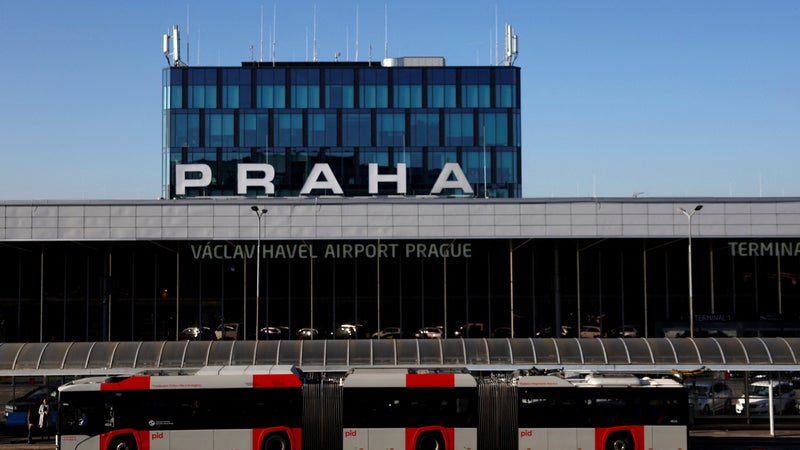
In Prague, Radio Prague International reports nine flights involved, four on arrival and five on departure, following a location at the airport at approximately 1115 hours. The aircraft was checked on the ground; the checks were then lifted without suspect discovery. Time and RFI direct report eleven flights to Prague and Sofia combined. The introduction of RFIs retains a figure of at least eight: these accounts are therefore not a harmonised European balance sheet and should not be added up. [S2] [S4] [S7]
The consequences are not identical everywhere. In Prague, police describe a limited impact on the operation of the airport. Two flights arriving in Sofia from London Stansted and Brussels landed without incident, according to the Bulgarian Ministry of Transport cited by BFMTV. In Copenhagen, the police announced an intervention, while considering in an initial assessment that passengers and other users had not been at risk. [S5] [S7]
Suspected coordination, unidentified authors
Media were also targeted on Friday, with evacuations to Ireland, notably at RTÉ, and in a Bulgarian audiovisual media. The Irish Government considers a coordinated campaign to cause disruption "probable", while not knowing who is responsible. This is a governmental assessment, not a demonstrated attribution of all alerts. [S2] [S5]
Some threats to Rome and Sofia airports on Thursday were signed by "male state fighters". This name evokes a Russian ultranationalist movement, but the link is not verified. RFI also reports a denial of Kremlin involvement. Neither a claimed signature nor a denial alone identify the authors: their responsibility remains to be established by the investigation. [S2] [S4] [S6]
Protecting passengers without increasing disturbance
For those concerned, a false alert leads to real constraints: new controls in Lisbon, airport change for some travellers on Thursday, evacuation of media employees on Friday. However, the sources do not estimate the overall cost of the interventions, the individual delays or the proposed support. They therefore do not make it possible to establish who will ultimately bear the expenses or what remedies will be mobilised in each case. [S2] [S5] [S6]
Two requirements emerge from the reactions reported by Time. Risk specialist Jean-Marc Rickli points out that the authorities cannot ignore a threat that could materialize. The London police chief, Mark Rowley, calls at the same time to avoid overreacting to every message. The issue of proportionality is thus to protect people without automatically transforming each anonymous threat into maximum disturbance; These positions are not an assessment of the decisions taken for each flight. [S4]
Sources
- RFIDIRECT - False bomb warnings: Europe targeted by a series of threats, an ongoing investigation
- Europe 1Four new bomb alerts on aircraft flying over France, which landed "without a shadow", announces Matignon
- Le TempsFour new bomb alerts on aircraft in France, in a wave that affects all Europe
- BFMTVNew bomb alerts on aircraft in Europe, government announces ongoing investigation
- Le Journal de Montréal — AFPNew false bomb alert on a flight from Lisbon
- Radio Prague InternationalNew bomb alerts target planes to or from Prague
- BFMTVNew series of false bomb alerts in Europe, including four on flights over France, the government announces an ongoing investigation