· Summary Prism · Updated on 26.10.2026
Brazil: How Lula Overturned the Poll Against Flávio Bolsonaro · Global Voices
Advanced to the first round, Lula won a fourth mandate through increased mobilization and a campaign focused on social protections and democracy. Flávio Bolsonaro announces that he wants to contest the election, prolonged after transportation difficulties. The springs of victory are documented, but their respective weight remains difficult to measure.
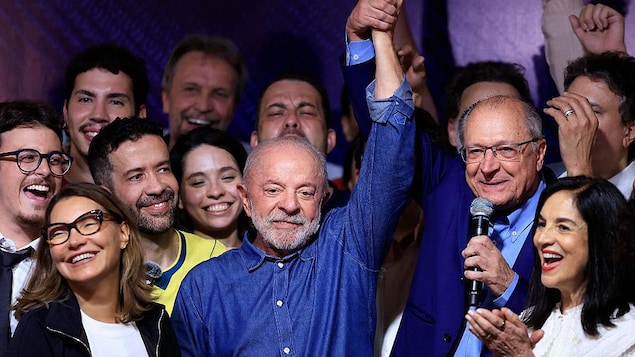
Luiz Inácio Lula da Silva won the second round of the Brazilian presidential election on 25 October 2026 against Flávio Bolsonaro, winning a fourth non-consecutive term. The BBC, RFI and RTS converge on this victory of the outgoing president, yet ahead of the first round. His opponent announced that he wanted to ask for the election to be cancelled, in particular by contesting the extension of voting operations. [S1] [S6] [S8]
A reversal of increased participation
The result reverses the initial force ratio. According to G1, Flávio Bolsonaro had won 47.03 per cent of the vote in the first round, compared with 45.16 per cent for Lula. On the second, the page consulted from the Brazilian media gives Lula 51.78 per cent, compared to 48.22 per cent, with 99.96 per cent of the ballot boxes being stripped. RTS accounts for 51.76 % compared to 48.24%, at a stage that is considered to be almost complete. These counts converge on the winner; they must not be presented as the same final result. [S14] [S8]
Participation is a tangible part of this upswing: G1 reported a drop in abstention from 21.08 per cent in the first round to 19.21 per cent in the second, as well as a drop in blank and invalid votes. These data show increased mobilization, without knowing how each former abstainer voted or reconstructing individual transfers from the eliminated candidates. [S14]
RFI attributes part of the reversal to the mobilization of left-wing activists, on social networks as well as on the street. Lula himself thanked the youth and claimed to have convinced the Brazilians of the importance of voting to defend democracy. This political reading must be distinguished from the measured result: the available documents do not allow to isolate the own effect of demonstrations, the digital campaign or this democratic argument. [S6] [S2]
Social measures at the centre of the campaign
The outgoing president also relied on concrete commitments for households. RTS highlights the upgrading of Bolsa Família, its programme for the poorest families. Reuters, in a dispatch published by UOL, reports, inter alia, a promise to increase this programme by 15% and a free public transport project on a national weekend, which is still to be submitted to Congress. Both media present social measures as a part of the campaign, without demonstrating their exact contribution to victory. [S8] [S13]
These commitments respond to material difficulties, but their funding remains an issue. Reuters reports public debt concerns and high interest rates. The dispatch distinguishes criticisms of increasing government spending from the role of interest charges in debt growth. For both beneficiaries and taxpayers, the challenge will therefore be to translate promises into funded schemes, not their only election announcement. [S13]
Access to ballot boxes at the heart of the challenge
The election day was marked by an extension of two hours of voting, decided by a judge of the Supreme Court after an appeal from the Lula team. It denounced bus withdrawals that reportedly prevented voters from joining their offices, particularly in the north-east. These charges are not sufficient to establish responsibilities: the documents available do not allow for precise quantification of those who are prevented from voting or assigning each interruption of service. [S7] [S8]
The issue directly affects the freedom of choice: to be able to vote implies being able to reach his office. The extension responded to the difficulties of access reported; Flávio Bolsonaro contests the conditions and asserts that it is "impossible to recognize the elections". However, the announcement of an application for annulment does not constitute proof of fraud or a judicial decision invalidating the vote. The sources cited do not provide the outcome of such an appeal. [S7] [S8]
Radio-Canada is an important addition: Bolsonaro's campaign would also have requested an extension of the vote due to the rains in the south of the country. The media reports that analysts find cancellation unlikely. This assessment remains distinct from what judges would decide on a motion and its evidence. [S2]
A presidential victory, not a power without counterweight
Lula will finally have to deal with a reinforced Congress on the right. France 24 and the RTS underline the conservative push to the legislature; Reuters reports that Bolsonaro's party and its allies could control both chambers. Presidential success therefore does not erase the parliamentary choice of voters: the implementation of social commitments will also depend on negotiations with elected officials with other priorities. [S5] [S8] [S13]
Sources
- BBC NewsWatch: How President Lula turned it around to beat Flávio Bolsonaro
- Radio-Canada InfoBrazil: Lula wins presidential election, Bolsonaro wants elections cancelled
- France 24Brazil: Lula re-elected president, Flavio Bolsonaro will ask for "cancellation of elections"
- RFILula beat Flavio Bolsonaro and is re-elected President of Brazil
- Ouest-FranceElection of Lula in Brazil: defeat, Flavio Bolsonaro assures that he will ask for "cancellation of elections"
- RTS InfoLula wins the presidential election in Brazil, Flavio Bolsonaro wants to "ask for the cancellation of the election"
- Reuters / UOLLula conquista histórico 4o mandateo presidencial com virada unpubl.a
- G1Lula tem 64 milhões de votos, e Flávio Bolsonaro, 59 milhões; comparison com a votação deles no 1o turno
- 24 heuresPresident in Brazil: Lula beat Flavio Bolsonaro who contests the results
- Tribune de GenèvePresident in Brazil: Lula beat Flavio Bolsonaro who contests the results
- 20 Minutes FranceBrazil: Lula wins presidential election, Bolsonaro refuses defeat · Global Voices
- Le MondeIN DIRECT, President in Brazil: Lula wins the election with 51.79% of the vote, Flavio Bolsonaro will "ask for cancellation" of the election
- Ouest-FranceANALYSIS. How Lula managed to secure a fourth term in Brazil
- Le DevoirAgainst all odds, Lula gets a fourth term, Brazil remains left
- O GloboFlávio Bolsonaro diz que não vai reconhecer resultado da eleição após derrota para Lula e critica decisão de Zanin de prorrogar horário da votação
- Poder360Com Lula, Brasil tem 1a virada de resultado do 1o para o 2o turno
- UOLLula derrota Flávio Bolsonaro em virada unpubl. na história das eleições